A Specialized Double-Ended Cotton Swab is designed for tasks that need controlled, detailed handling. Unlike a standard cotton swab, it may feature two ends with different shapes, sizes, or textures. One tip might have a firm, pointed form. The other may offer softer, broader coverage. This contrast helps users reach narrow edges, clean small surfaces, or apply limited amounts of liquid with greater control.
Its value depends on construction, not appearance alone. Experienced technicians examine the cotton’s firmness, fiber shedding, shaft strength, and tip attachment before choosing a swab. In laboratories, electronics maintenance, cosmetics, and precision cleaning, these details can affect the final result. A loose fiber can remain on a lens. An overly firm tip can scratch a delicate surface. Small differences matter.
Quality claims should be supported by clear specifications and practical testing. Reputable manufacturers should identify materials, intended applications, packaging conditions, and handling guidance. Users should also follow the relevant equipment or product instructions. Not every double-ended design suits every task. That limitation deserves attention. The word “specialized” can sound impressive, but it does not guarantee universal performance. A careful user checks compatibility first, then works with light pressure and clean technique. Simple, but important. This article explores how these swabs are built, where they are useful, and what factors help distinguish a dependable tool from a poorly matched one.
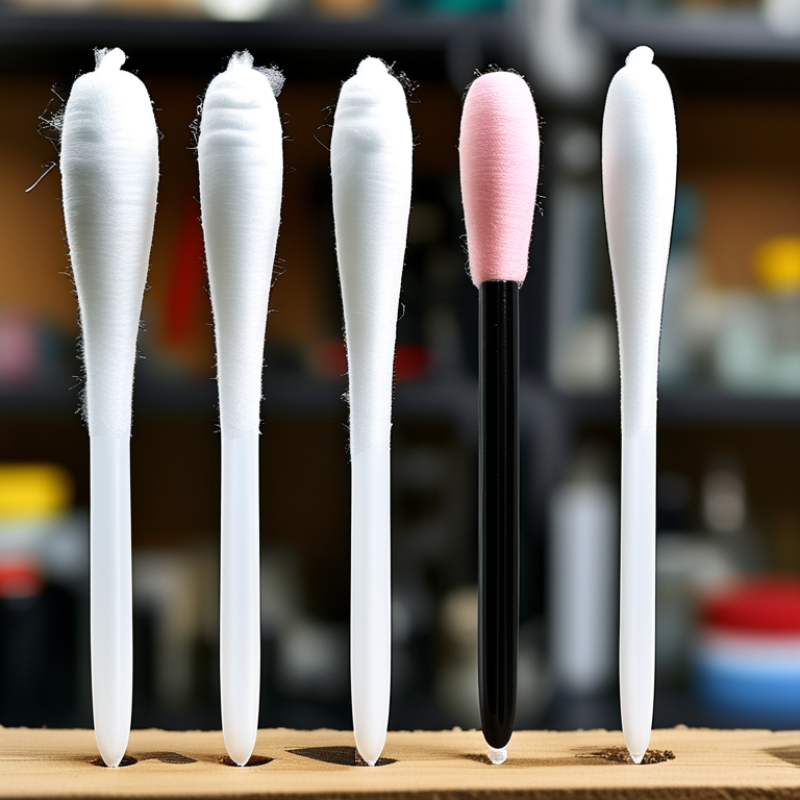
A specialized double-ended cotton swab has absorbent tips on both sides of one shaft. Its core design supports two related tasks without reaching for another tool. One end may use a firm, pointed head for narrow grooves. The other may use a softer, fuller head for gentle wiping or controlled sample collection. Materials can include medical-grade cotton, molded polymers, or paper shafts. However, “specialized” does not automatically mean sterile, lint-free, or suitable for clinical use. Packaging and verified specifications matter.
Market research reflects steady demand for precision swabs. Grand View Research’s 2024 cotton swabs market assessment identifies healthcare, electronics, and personal care as major application areas. The World Health Organization’s 2024 Global Report on Infection Prevention and Control also stresses that correct tools and procedures support safer care environments. A swab alone cannot prevent contamination. Poor storage, excessive pressure, or repeated contact can transfer fibers and microorganisms. This is where practical experience challenges simple product claims.
Tips: Check tip density, shaft flexibility, and stated sterility before use. Match the narrow end with detail work. Keep the unused tip away from surfaces. For sensitive applications, review ISO-related quality documents and batch information. A useful improvement is labeling each end by purpose, although users may still confuse them under time pressure. Do not assume a double-ended design doubles efficiency; disposal rules and handling steps may remove that advantage.
A specialized double-ended cotton swab combines two working tips on one shaft. The materials determine how each end behaves. Cotton offers strong absorbency and a soft, familiar feel. However, it can release fibers during delicate cleaning. Polyester and rayon usually provide cleaner release and more consistent fiber control. Foam tips hold less liquid, but they can spread solutions evenly across flat surfaces.
Tip design creates the main functional difference. One end may use a pointed cotton tip for narrow grooves. The opposite end may be rounded for wiping, applying, or gentle surface contact. Flocked nylon tips collect samples efficiently because their vertical fibers increase surface exposure.
A 2024 Grand View Research analysis estimated the global medical swabs market at about USD 1.6 billion in 2023, with annual growth near 4.7% through 2030. That growth reflects wider demand for controlled sampling and contamination-sensitive handling.
A plastic shaft bends slightly and reduces breakage risk. A wooden shaft feels firmer, but it may shed particles if poorly finished. Some designs include a breakpoint for tube-based sampling. Sterility, packaging, and tip release matter as much as cotton content.
I would not call higher absorbency better. It may trap the sample instead of releasing it. MarketsandMarkets’ 2024 medical swabs analysis also highlights material selection and application-specific design as key performance factors. Real-world testing still matters. Hands feel differences that specifications miss.
What Is a Specialized Double Ended Cotton Swab?
Common Applications in Medical, Cosmetic, and Laboratory Settings
A specialized double ended cotton swab has two cotton tips on one handle. Each end may serve a different, controlled purpose. In medical settings, staff can use one tip for gentle surface cleaning and the other for applying a measured antiseptic solution, when approved by facility procedures. Sterile packaging matters. A swab is not automatically sterile because it looks clean. Users should check the label, expiry date, and package seal before contact with a wound or clinical sample.
Cosmetic professionals often value the narrow shape for detail work. One end can apply product along a lash line, while the other removes a small smear from nearby skin. It can also support careful cleanup around brows or lips. Clean handling is essential, especially when working near the eyes. A fresh swab should be used for each person. Reusing one can transfer oils, pigments, or microorganisms. Small mistakes happen.
In laboratories, double ended swabs may help with controlled sample preparation, slide cleaning, or removing residue from hard-to-reach equipment surfaces. The correct material depends on the test, because cotton fibers and natural oils may affect sensitive analysis. Some procedures require synthetic tips instead. Laboratory personnel should follow the written method and record unusual observations. It is easy to treat a cotton swab as a simple tool, but its fibers, packaging, and handling can influence reliable results.
| Application Area | Typical Tip Configuration | Common Dimensions | Material Characteristics | Typical Uses | Key Handling Considerations |
|---|---|---|---|---|---|
| Medical Examination | Two absorbent cotton tips; one standard and one fine or tapered tip | Overall length commonly 150–200 mm; tip length approximately 15–25 mm | Medical-grade cotton on a wood, paper, or plastic shaft; sterile versions may be individually packaged | Collecting or transferring surface specimens, applying antiseptic solutions, cleaning small areas, and general clinical examination tasks | Use a sterile product when the procedure requires sterility. Do not reuse disposable swabs or touch the tips before use. |
| ENT and Oral Care | One rounded tip and one narrow or pointed tip for access to confined areas | Overall length commonly 150–180 mm; narrow tips may be about 2–5 mm wide | Soft, low-lint cotton designed for gentle contact with mucosal or external surfaces | Sampling accessible areas, applying topical preparations, and cleaning around oral, nasal, or external ear regions under appropriate professional guidance | Avoid inserting the swab deeply into the ear canal, nose, or throat. Follow applicable clinical procedures and specimen-collection instructions. |
| Wound and Skin Care | Two medium-size absorbent tips, sometimes with one pointed end for precision application | Overall length commonly 150–200 mm; tip diameter approximately 5–10 mm | Absorbent cotton helps distribute or remove small amounts of liquid; shaft rigidity varies by intended use | Applying topical solutions, cleaning around minor wounds, removing residue, and reaching small or uneven skin areas | Use only as directed by a qualified professional for open wounds. Sterility, packaging integrity, and expiration status are important for clinical applications. |
| Cosmetic Application | One rounded blending tip and one pointed precision tip | Overall length commonly 75–150 mm; tip diameter approximately 3–8 mm | Soft cotton provides controlled absorption and gentle blending; shafts are usually lightweight | Correcting eyeliner, cleaning mascara edges, applying small amounts of makeup remover, and blending products around the eyes or lips | Use a fresh swab for each person or product area. Avoid sharing used swabs and prevent contact between the tip and product container. |
| Nail and Beauty Care | One pointed tip and one flat or rounded tip | Overall length commonly 100–150 mm; pointed tips may be 2–4 mm wide | Compact cotton tips allow localized application and cleanup without requiring large tools | Cleaning polish from cuticle edges, applying nail-care liquids, removing small cosmetic residues, and detailing artificial nail applications | Keep solvents away from skin when irritation is possible. Dispose of the swab after use if it has contacted chemicals or biological material. |
| Laboratory Sampling | Two different tip shapes, such as regular cotton and narrow cotton, for sampling and transfer tasks | Overall length commonly 150–200 mm; tip size selected according to the sampling surface | Cotton is absorbent but may release fibers and can interact with certain analytical reagents; specialized synthetic tips may be preferred for sensitive assays | Collecting non-critical surface samples, transferring small liquid volumes, cleaning equipment edges, and preparing slides or work areas | Check compatibility with the test method. For microbiology or molecular testing, use a validated swab type because cotton, shaft material, and preservatives can affect recovery. |
| Electronics and Precision Cleaning | One fine pointed tip and one compact rounded tip | Overall length commonly 100–150 mm; fine tips may be approximately 1–3 mm wide | Low-lint or lint-reduced materials are preferred; wooden shafts should be kept dry and handled carefully near components | Removing dust or residue from narrow gaps, connectors, optical housings, and other small non-powered components | Disconnect power before cleaning. Avoid excessive pressure, loose fibers, and liquids that may damage sensitive components. |
| Packaging and Sterility Options | Single-use, double-ended format with matching or two different cotton tips | Common package formats include individual wrappers, multi-unit packs, and laboratory containers | May be non-sterile or sterilized by a validated process, depending on the intended application; packaging should protect both tips | Convenient access to two tip sizes while reducing the need to handle a second applicator | “Sterile” should only be claimed when the product has been processed, packaged, and labeled according to the applicable requirements. Inspect the package before use. |
A specialized double-ended cotton swab has two functional tips on one shaft. One side may collect; the other may apply, clean, or position material. Its value depends on fit, not the number of ends. When selecting a type, check tip size, fiber density, shaft flexibility, and extractables data.
For controlled environments, request lot records, sterility status, and packaging integrity. A 2024 Grand View Research market report estimated global cotton swab revenue near USD 1.5 billion in 2023. It projected an annual growth rate of about 4.8%. This scale reflects broad use, not proof that every swab suits every task.
Before use, inspect the seal and tip shape under good light. Do not touch either tip with bare fingers. Hold the shaft near its center. Use the smaller end for narrow surfaces and the larger end for wider contact. Rotate slowly, with light pressure, then discard according to site procedures.
For sampling, confirm validated recovery and compatibility data. Cotton fibers can trap residues. For application, confirm that the tip will not shed.
I have seen “universal” swabs selected too quickly. That shortcut can distort results. A sterile swab is not automatically low-lint or chemically clean. When documentation is thin, pause and request testing evidence.
A specialized double ended cotton swab has cotton tips at both ends, often with different sizes or textures. This design supports detailed cleaning, sampling, or surface application. However, “double ended” does not mean sterile. Sterility must be stated on the packaging and supported by controlled manufacturing records. The CDC’s Guideline for Disinfection and Sterilization emphasizes that reusable equipment requires validated cleaning and processing. A disposable swab should not be treated as reusable.
Storage conditions affect hygiene before use. Keep swabs sealed in a clean, dry cabinet, away from dust, moisture, direct sunlight, and chemical vapors. Check the package for damage and the expiry date. A sealed pack is not a guarantee of sterility. That distinction matters. Open it only before the procedure, and avoid touching either cotton tip. The WHO’s hand hygiene guidance recommends 40–60 seconds for soap-and-water washing, or 20–30 seconds for alcohol-based hand rubbing. Clean hands still need careful handling. In real workplaces, rushed opening and temporary storage are common weak points. I have seen how one exposed tip can undermine an otherwise careful process. Use each swab once, discard it according to the applicable facility procedure, and never push it deeply into a body opening. The manufacturer’s instructions should guide the intended application, although those instructions may not always explain every practical risk.
It has two absorbent tips on one shaft. One end may be pointed, while the other feels softer and fuller. This design supports related tasks without changing tools.
No. Sterility must appear clearly on the packaging. Manufacturing records should support that claim. A sealed package alone is not proof.
Tips may use cotton, polyester, rayon, foam, or flocked nylon. Shafts may be plastic, wood, paper, or molded materials. Each choice changes absorbency, flexibility, and fiber release.
A firm, pointed tip usually fits narrow grooves better. A rounded tip suits wiping or gentle surface contact. Do not press hard. Delicate parts can scratch.
Not necessarily. High absorbency may trap a sample instead of releasing it. Foam can spread liquids evenly but may hold less fluid. Practical testing still matters.
Keep them sealed in a clean, dry cabinet. Avoid dust, moisture, sunlight, and chemical vapors. Check damaged packaging and expiry dates before use. Small storage mistakes matter.
No. A disposable swab should be used once and discarded under the applicable procedure. Reusing it can transfer fibers or microorganisms. Efficiency may disappear here.
Wash hands or use appropriate hand sanitizer before opening the package. Touch the shaft only. Keep the unused tip away from nearby surfaces. Under pressure, users may still confuse the ends, so clear labels could help.
Only when the product states the intended application and required specifications. Confirm sterility, batch details, tip density, and shaft flexibility. Do not assume “specialized” means clinically suitable. When uncertain, professional guidance is safer.
A Specialized Double-Ended Cotton Swab is a versatile tool designed with two cotton tips, often shaped or sized differently to support precise cleaning, application, sampling, or detail work. Its construction may include cotton, synthetic fibers, or blended materials, while the tips can vary in softness, firmness, absorbency, and pointed or rounded form. These functional differences allow users to choose a suitable swab for delicate surfaces, controlled product application, moisture removal, or sample collection.
Specialized Double-Ended Cotton Swabs are commonly used in medical care, cosmetics, electronics maintenance, crafts, and laboratory procedures, depending on their material and level of cleanliness. Selecting the right type requires considering the intended task, tip texture, absorbency, sterility, and compatibility with the surface or substance involved. For safe use, handle swabs with clean hands, avoid unnecessary contact with the tips, use them only as directed, and dispose of single-use products appropriately. Store unused swabs in a sealed, dry, and clean environment to protect their hygiene and performance.

Xiaomianjia Medical