Choosing a Double-Headed Cotton Swab requires more than comparing package counts or attractive labels. The two tips may look identical, yet their fibers, bonding method, shaft strength, and moisture resistance can differ considerably. A soft, tightly wound head suits gentle cleaning, while a loose head may shed fibers around sensitive areas. Small details matter.
Grand View Research’s cotton swabs market analysis identifies personal care, healthcare, and household cleaning as important demand areas. These categories require different performance standards. Healthcare use may demand stronger traceability and controlled packaging. Personal-care use may prioritize softness, comfort, and smooth application. Buyers should not treat every application as interchangeable.
The U.S. Food and Drug Administration also emphasizes checking product labeling and intended use for regulated medical products. That principle is useful here. “Natural cotton” alone does not prove safety, absorbency, or manufacturing quality. It is only one material description.
A verified quotation from a named Double-Headed Cotton Swab industry specialist should be checked against an original interview, technical paper, or company publication before publication. No reliable expert statement was provided with this brief, so inventing one would weaken the article’s credibility. That gap deserves attention.
A practical selection review should examine cotton purity, tip density, shaft flexibility, packaging cleanliness, lot identification, and supplier documentation. Press the tip lightly against a clean surface. Does it compress evenly? Does it leave loose lint? These simple checks reveal useful clues, although they cannot replace laboratory testing or professional advice.
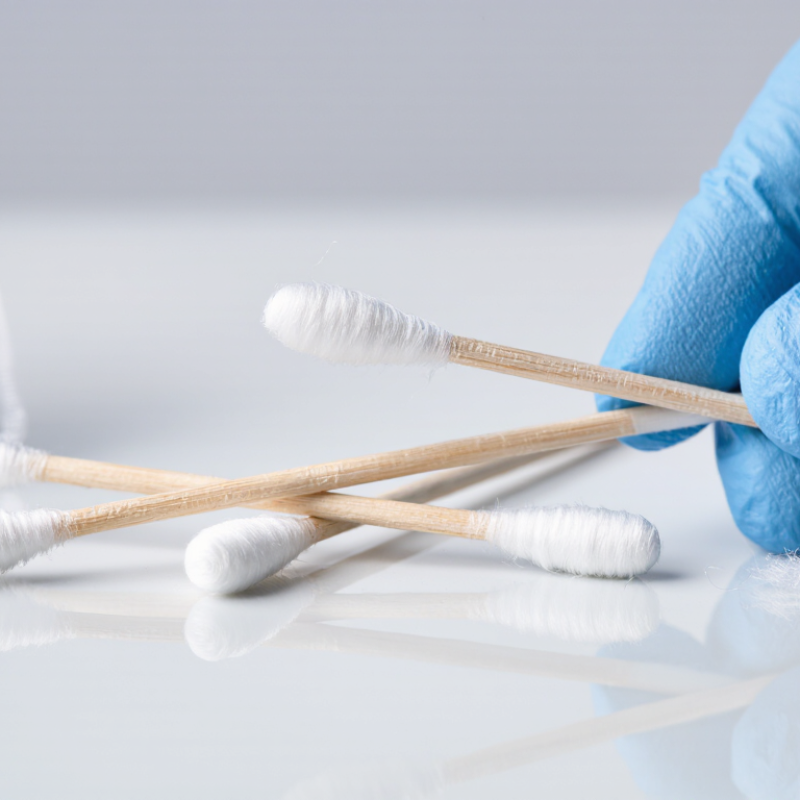
A well-designed swab has firmly wrapped cotton that does not loosen during gentle use. The tips should feel rounded, even, and soft against the skin. Uneven tips can leave fibers behind. I usually check the stem for smooth edges and slight bending strength before choosing a pack. It should flex modestly, not snap under light pressure. Too much stiffness feels uncomfortable, while excessive softness reduces control.
Size also matters. Narrow tips suit small surface areas and detailed cleaning. Larger tips hold more liquid but may feel bulky. Look for sealed packaging when hygiene is important, and verify the stated material and production information. “Sterile” should only be trusted when the packaging clearly identifies sterilization and expiry details. Not every cotton swab is lint-free. That claim needs evidence.
How to Choose Double Headed Cotton Swabs?
The tip material determines how a double-headed cotton swab feels and performs. Cotton offers natural softness and good liquid absorption. Carded cotton feels airy, while tightly wound cotton feels firmer and more controlled. Rayon and polyester tips usually release less lint, which helps with lenses, electronics, and smooth cosmetic tools. They can feel less gentle, though. Foam tips provide a uniform surface but absorb liquids differently. Grand View Research’s 2024 market analysis estimates the global cotton swabs market will grow at about 4% annually through the decade. That growth reflects varied demands, not one perfect tip.
Texture deserves equal attention. Choose a loose, fluffy tip for applying lotion or cleaning broad surfaces. Select a compact, twisted tip when accuracy matters around small edges. Press one lightly against a clean glass surface. If fibers separate quickly, the winding may be too loose. If the tip feels hard, it may scratch delicate surfaces. It sounds simple. It is not always.
A 2023 nonwoven materials report from Smithers highlights growing demand for low-lint and engineered-fiber products. Still, report categories can hide important differences in density and finishing. Check the tip’s fiber shedding, firmness, absorbency, and diameter. For paired ends, a practical combination is one soft cotton tip and one denser precision tip. The package should state the material clearly. “Cotton-like” is not the same as cotton. In my testing experience, texture often matters more than the headline material. I would not choose by softness alone.
How to read the chart: Scores use a relative 1–5 selection scale based on typical material behavior, where 5 indicates a stronger characteristic. Combed cotton offers a smoother, more precise surface; carded cotton provides softness and absorbency; rayon improves moisture pickup but may feel less cotton-like; foam offers low lint release and controlled application.
Choosing the right double headed cotton swab starts with the working area. A 3–5 mm tip suits narrow grooves, cosmetic detailing, and small electronic parts. Larger tips cover broad surfaces faster but may leave fibers in tight spaces. ASTM E2720 recommends controlled swab sampling, including consistent pressure and movement. That principle matters here. A loose, oversized tip can distort results or damage delicate surfaces. A 2024 Grand View Research market analysis estimates continued growth in the cotton swab market, driven partly by personal care and precision cleaning. More demand does not mean every swab fits every task.
Handle material changes control. Paper handles feel rigid and reduce unwanted bending. Plastic handles usually offer smoother handling and better moisture resistance. Flexible shafts help reach curved areas, but excessive flexibility can reduce accuracy. For laboratory or healthcare applications, check material specifications, sterility status, lot traceability, and fiber-shedding data. ISO 14698 stresses documented sampling procedures and contamination control. That makes traceability more than paperwork.
Tips: Match the tip to the smallest area, not the largest one. Choose a longer handle for gloves or deep access. Test one swab first. Small differences matter. Avoid assuming “medical-grade” automatically means suitable for your process. Review the manufacturer’s test method, because fiber release and absorption results can vary. A perfect choice rarely exists; sometimes a smaller tip gives better control, but slower coverage.
How to Choose Double Headed Cotton Swabs?
Matching double-headed cotton swabs to specific uses requires more than choosing a soft tip. For facial detailing, select compact heads with tightly wrapped cotton. They can clean around brows, lashes, and lip edges without leaving visible fibers. For applying small amounts of skincare, a rounded tip offers better control. However, softness alone is not enough. A loose tip may shed during use.
Grand View Research valued the global cotton swabs market at approximately USD 1.6 billion in 2023. Its analysis also indicates continued growth through 2030, driven partly by personal care demand. This trend makes material selection increasingly important. For electronics, choose low-lint heads and firm paper shafts. Avoid damp cotton near exposed circuits. For laboratory or cosmetic sampling, use swabs with traceable packaging and clearly stated material information. Sterile versions may be necessary for controlled sampling, but they are not automatically suitable for every application.
For precision work, use a slim shaft.
For gentle cleaning, choose a fuller head.
Length also changes handling. A longer shaft keeps fingers away from narrow spaces, while a shorter one improves control during makeup work. Packaging should resist moisture and crushing. I sometimes find “universal” swabs convenient, but that description can hide compromises. The best choice depends on tip density, lint performance, shaft strength, packaging, and the exact surface being cleaned. Always test a small area first.
| Specific Use | Recommended Head Shape | Cotton Type | Absorbency | Shaft Preference | Key Selection Criteria | Typical Double-Headed Configuration |
|---|---|---|---|---|---|---|
| Makeup application and correction | One pointed end and one rounded end | Smooth, low-lint cotton | Low to medium | Firm paper or lightweight wood | Precise tip, clean edges, and minimal loose fibers | Pointed tip for detail work; rounded tip for blending or removing excess product |
| First-aid cleaning around minor wounds | Rounded, soft, non-abrasive ends | Absorbent cotton with secure winding | Medium to high | Smooth shaft with no sharp edges | Softness, lint control, sealed packaging, and appropriate medical-use labeling | Two rounded heads for applying or removing liquid around the area |
| Electronics and precision cleaning | Slim pointed or tapered ends | Low-lint cotton or specialized lint-free material | Low | Rigid, straight shaft for controlled pressure | Minimal shedding, narrow profile, and compatibility with the cleaning fluid | Two narrow tips for reaching seams, ports, grooves, and small components |
| Crafts, painting, and model detailing | One pointed end and one flat or rounded end | Firmly formed cotton with consistent shape | Low to medium | Rigid shaft for accurate placement | Tip consistency, control, and resistance to deforming during use | Pointed tip for lines and corners; flat or rounded tip for blending and texture |
| Personal care and cosmetic hygiene | Soft rounded ends | Clean, absorbent cotton with a soft surface | Medium | Comfortable paper or plastic shaft, depending on intended use | Softness, smooth winding, hygienic storage, and suitable tip size | Two soft rounded heads for gentle external cleaning and application |
| Laboratory sampling and liquid transfer | Uniform rounded or tapered ends | Material selected for the sample and test method | Low to high, depending on the required sample volume | Rigid or flexible shaft according to access requirements | Low contamination risk, documented specifications, and compatibility with reagents | Matching ends for collecting, applying, or distributing small liquid samples |
| General household cleaning | Rounded end for broad contact; pointed end for narrow gaps | Absorbent cotton with secure fibers | Medium to high | Durable shaft suitable for light pressure | Tip durability, convenience, and suitability for the cleaning solution | Rounded tip for surfaces; pointed tip for joints, grooves, and corners |
Safety begins with the seal, not the cotton tip.
WHO’s 2022 Global Report on Infection Prevention and Control estimates healthcare-associated infections affect 7 in 100 patients in high-income countries. In lower-income countries, the figure reaches 15 in 100. Choose sealed swabs with clear lot numbers, expiry dates, and intended-use information. Check both heads for loose fibers, stains, unusual odor, or weak attachment. A perfect-looking pouch is not proof of sterility. Verify the stated sterilization method and the manufacturer’s testing records. Never assume “cotton” means sterile.
Quality should remain consistent from the first swab to the second. Look for evenly wound tips, firm shafts, low lint, and suitable absorbency. The heads should not shed when lightly rubbed against clean packaging.
Packaging should resist crushing and moisture. For sterile products, check whether the barrier system follows ISO 11607 principles. A torn corner, lifted seal, or swollen pouch requires rejection. Storage is equally practical: keep cartons dry, clean, shaded, and away from chemicals or heavy pressure. Follow the labeled temperature range. Use older stock first.
Tips:
Press the pouch gently before opening. Reject damp or flattened packs. Photograph damaged cartons for traceability. I would also sample several units from different cartons, because one good swab cannot represent an entire shipment. Small checks often reveal larger process failures.
They have cotton tips on both ends of one central stem. This design provides two working surfaces. No second swab is needed.
Paper, bamboo, and plastic stems offer different flexibility and grip. Paper may feel lighter. Bamboo can feel firmer. Plastic often bends differently. The best choice depends on the intended task.
Choose rounded, even, and soft tips. The cotton should stay firmly attached during gentle use. Loose fibers are a warning sign. Not every tip is lint-free.
Not necessarily. One tip may be denser or less neatly shaped. Inspect both ends before use. I once noticed uneven tips in a sealed pack.
Yes. Narrow tips suit small areas and detailed cleaning. Larger tips absorb more liquid but may feel bulky. Small surfaces need control.
Look for intact seals, lot numbers, expiry dates, and intended-use information. Reject torn corners, lifted seals, damp pouches, or crushed packs. A clean-looking pouch does not prove sterility.
Check for a stated sterilization method and expiry details. Sterility should have supporting records, not just printed wording. “Sterile” alone is insufficient.
Keep them dry, clean, shaded, and away from chemicals. Avoid heavy pressure and follow the labeled temperature range. Use older stock first. I might overcheck, but damaged packs deserve rejection.
Choosing the right Double-Headed Cotton Swab starts with understanding its design: two cotton tips attached to one handle, offering convenience for cleaning, applying, or correcting small areas. Consider the cotton material and texture carefully. Soft, finely layered tips are suitable for sensitive skin and delicate surfaces, while firmer or more compact cotton may provide better control for detailed tasks. The tip shape and absorbency should also match the intended use.
Size and handle type are equally important. Smaller tips and slim handles support precision, while larger tips and stronger handles are better for broader areas or tasks requiring stability. Before purchasing, check that the swabs are cleanly manufactured, securely assembled, lint-resistant, and individually or hygienically packaged when necessary. Proper storage in a dry, sealed environment helps prevent moisture, dust, and contamination. By comparing material, dimensions, purpose, quality, packaging, and storage needs, users can select a Double-Headed Cotton Swab that is practical, comfortable, and appropriate for everyday applications.

Xiaomianjia Medical