2026 Top Wooden Stick Cotton Swab Manufacturers?

Time:2026-09-18 Author:Madeline
0%

The 2026 search for leading Wooden Stick Cotton Swab manufacturers requires more than a polished catalog. Buyers need evidence. They should examine wood sourcing, cotton purity, stick smoothness, tip attachment, packaging hygiene, and batch consistency. A swab may look simple. Its quality is not.

Grand View Research identifies personal-care products as an important cotton-swab application. Smithers’ nonwovens outlook also points to continued demand for hygiene materials, supported by convenience and disposable-use habits. These reports provide useful market direction, but they do not rank individual manufacturers. That gap matters. Supplier comparisons should therefore combine market evidence with factory-level verification, including ISO documentation, incoming-material controls, production photographs, and independent sample testing.

Dr. Subhash K. Batra, a recognized textile scientist and cotton-fiber specialist, states, “Fiber properties determine how cotton performs in use.” This principle applies directly to Wooden Stick Cotton Swab production. Cotton should feel soft against the skin, while the wooden stick should remain firm without splintering. The bond between both parts deserves close inspection. A loose tip can damage user confidence quickly.

The strongest manufacturers in 2026 will likely balance automation with careful inspection. They will offer stable dimensions, traceable materials, flexible private-label packaging, and responsive export support. Yet rankings remain imperfect. Public data can lag behind factory changes, and online claims may hide weak quality controls. This guide evaluates leading suppliers through practical criteria, not visibility alone. Companies that welcome audits, provide clear specifications, and disclose testing records deserve closer attention.
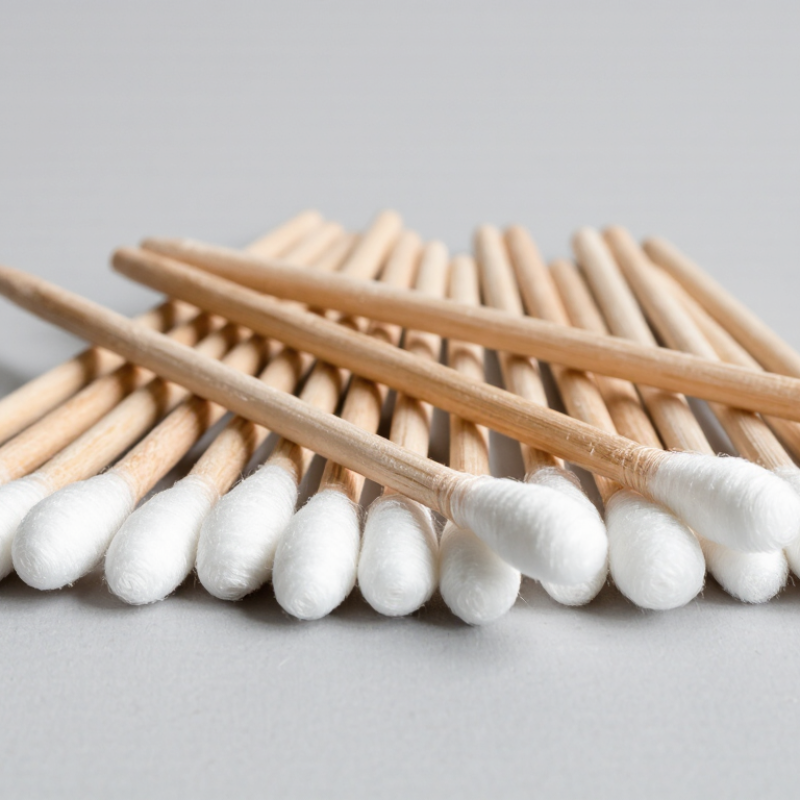
2026 Top Wooden Stick Cotton Swab Manufacturers?

What Are Wooden Stick Cotton Swabs and Why Do They Matter in 2026?

Wooden stick cotton swabs combine a soft cotton tip with a firm, polished wood shaft. The shaft is usually made from birch, bamboo, or another suitable timber. Unlike plastic sticks, wood can reduce dependence on fossil-based materials. However, it is not automatically a sustainable choice. Forestry practices, coatings, adhesives, packaging, and disposal conditions all affect its environmental value.

In 2026, these swabs matter because buyers expect clearer material information and more responsible manufacturing. A reliable supplier should control shaft smoothness, tip alignment, cotton density, and adhesive strength. Small defects matter. A rough edge can scratch skin, while loose cotton may leave fibers behind. Experienced purchasers should also request batch records, material specifications, and safety testing relevant to the intended use. “Natural” is not enough evidence.

Quality needs attention.

Manufacturers are improving production with cleaner assembly areas, automated inspections, and packaging that limits moisture exposure. Wooden shafts may feel stronger during precise cleaning or craft work, but they can break or splinter when poorly processed. Their biodegradability also depends on local waste systems and product composition. I would avoid judging a manufacturer by appearance alone. A plain package can hide excellent controls, while attractive wording can hide weak documentation. Careful evaluation remains necessary in 2026.

How to Evaluate Leading Wooden Stick Cotton Swab Manufacturers

Evaluating leading wooden stick cotton swab manufacturers requires more than comparing prices. Examine their production experience, material controls, and quality records. Ask where the wood comes from and how it is dried. Poorly dried sticks may bend, splinter, or feel rough in the hand. Check whether cotton is attached evenly, without loose fibers. Request recent batch samples, not only showroom pieces. A polished brochure is not proof.

Reliable manufacturers should explain their inspection process clearly. Look for checks on stick length, surface smoothness, cotton weight, moisture, and packaging hygiene. Factory visits can reveal important details, including storage conditions and worker procedures. Independent laboratory reports may support material and safety claims. However, documents can become outdated. Confirm their dates and match them with the current production line. I would also review complaint records, because a perfect history may be unrealistic.

Tips: Compare three sample batches under the same conditions. Twist each stick gently and inspect the cotton tip closely. Ask how defects are handled and replaced. Confirm minimum order quantities, lead times, and packaging options in writing. Do not choose the lowest quote too quickly. A cheaper product may create higher sorting costs later. Even careful buyers can miss small defects, so keep a documented approval sample.

2026 Profiles of Top Wooden Stick Cotton Swab Manufacturers

2026 Profiles of Top Wooden Stick Cotton Swab Manufacturers

In 2026, leading wooden stick cotton swab manufacturers compete through material control, clean production, and dependable delivery. Their profiles often begin with the wood source. Responsible suppliers should identify timber origin, drying methods, and moisture limits. Well-dried birch or bamboo sticks feel smooth, firm, and consistent in hand. Small surface splinters can reveal weak sanding or rushed inspection.

Responsible suppliers should identify timber origin, drying methods, and moisture limits.

Top manufacturers usually separate stick production, cotton forming, assembly, and packaging. Their facilities should show controlled airflow and documented hygiene procedures. Experienced teams check stick length, cotton density, tip alignment, and package sealing. They also retain batch records for traceability.

These details support professional purchasing decisions. Still, a polished website proves very little. I would request recent audit evidence and production samples.

Tips:

Compare at least three samples before ordering. Rub each stick between gloved fingers. Check for loose fibers, odor, uneven tips, and sharp edges. Ask about wood certification, quality testing, minimum order quantities, and lead times. Confirm whether packaging protects the cotton from dust and moisture.

A factory may offer attractive pricing, yet inconsistent batches can create hidden costs. That part is easy to underestimate. Profiles should also mention complaint handling and corrective actions. Reliable manufacturers explain mistakes clearly, rather than hiding behind perfect claims.

Manufacturing Standards, Materials, and Quality Control Practices

Wooden stick cotton swab manufacturers should control three variables closely: material safety, dimensional consistency, and contamination risk. Birch and poplar are common choices because they can be shaped smoothly and maintain adequate stiffness. However, a dry-looking stick may still contain cracks or uneven moisture. Incoming inspections should check wood species, moisture level, diameter, surface smoothness, and splinter resistance.

Responsible sourcing also matters. The FAO Global Forest Resources Assessment 2020 estimates that forests cover 31% of global land area. This figure does not prove responsible harvesting, so manufacturers need documented supply records and supplier evaluations. The Textile Exchange Materials Market Report 2024 reports that global fiber production reached about 124 million tonnes in 2023. Cotton sourcing therefore deserves traceability, especially when buyers request recycled or responsibly produced content.

Quality control should follow a written, repeatable system. ISO 9001 supports process control, while ISO 2859-1 provides sampling methods for appearance, dimensions, and packaging defects. Each batch should test cotton absorbency, tip attachment strength, lint release, odor, and microbial limits. If products are intended for medical use, additional validation and applicable medical-device requirements are necessary. Cosmetic-use swabs require different claims and controls.

Factories should retain batch codes, inspection records, and corrective-action reports. Some production lines still rely too heavily on visual checks. That is a weakness. A smooth tip can hide poor bonding, and occasional manual sampling may miss unstable equipment. Better plants combine operator experience with calibrated gauges, documented testing, and periodic independent laboratory verification.

2026 Top Wooden Stick Cotton Swab Manufacturers? - Manufacturing Standards, Materials, and Quality Control Practices
Industry benchmark for wooden-stick cotton swab production, compliance, material selection, and quality assurance
Evaluation Dimension Common Industry Specification Recommended Manufacturing Practice Quality-Control Evidence
Wooden Stick Material Smooth, kiln-dried birch or bamboo; uniform grain; free from visible mold, resin pockets, splinters, and excessive odor. Use traceable, mechanically processed wood with controlled moisture and surface polishing before cotton application. Incoming material inspection, moisture records, visual inspection, splinter screening, and lot traceability.
Stick Dimensions Typical overall length: approximately 75–150 mm; diameter commonly about 2–3 mm, depending on application. Define dimensional tolerances on technical drawings and control cut length, roundness, straightness, and end finish. Calibrated rulers, gauges, optical measurement, sampling plans, and documented nonconformance control.
Cotton Fiber Absorbent cotton or purified cotton fiber with consistent whiteness, low foreign-matter content, and suitable fiber length. Control fiber opening, carding, winding density, and cotton-head weight to achieve uniform absorbency and shape. Certificate of analysis, fiber cleanliness checks, head-weight sampling, visual inspection, and absorbency testing.
Cotton-Head Attachment Cotton head should remain securely attached during normal handling and intended use without loose fibers or exposed sharp wood. Apply controlled winding and, where used, a documented medical-grade adhesive process compatible with the intended application. Pull or twist testing, loose-fiber inspection, adhesive batch records, and periodic process validation.
Surface Safety No splinters, cracks, sharp edges, detached particles, abnormal discoloration, or foreign matter. Use sanding, polishing, controlled handling, and inspection under suitable lighting before final packing. 100% visual inspection or validated automated inspection, defect classification, and reject-rate monitoring.
Microbiological Control Limits depend on intended use, market, and whether the product is sold as sterile or non-sterile. Maintain controlled production areas, hygienic personnel practices, environmental monitoring, and validated sterilization when required. Bioburden testing, microbial limits testing, environmental monitoring, and sterilization-cycle records where applicable.
Sterilization Capability Common validated methods include ethylene oxide, gamma irradiation, or electron-beam processing, depending on product design and packaging. Select the method through risk assessment and validate cycle parameters, residuals, material compatibility, and packaging performance. Sterilization validation, dose or cycle records, residual testing where relevant, and routine release documentation.
Chemical and Material Safety Materials should be appropriate for the intended contact, free from prohibited substances, and supported by supplier documentation. Assess adhesives, inks, coatings, packaging, and processing aids through a documented material-risk review. Supplier declarations, restricted-substance screening, extractables or chemical testing when applicable, and change control.
Quality Management System ISO 9001 is a widely recognized framework for quality management; medical-device production may require additional regulatory controls. Maintain controlled procedures for purchasing, production, inspection, calibration, corrective action, complaints, and record retention. Current certificate, audit reports, batch records, CAPA logs, training records, and internal audit results.
Medical-Device Compliance Requirements vary by intended use and destination market; products may fall under different classifications or general consumer-product rules. Define intended use, perform risk management, establish technical documentation, and verify applicable labeling and registration duties. Regulatory assessment, risk-management file, product specifications, declaration documents, and market-specific approvals where required.
Packaging Integrity Packaging should protect cotton heads from moisture, dust, crushing, and contamination throughout storage and distribution. Use packaging materials suited to the product, control sealing conditions, and verify transport and shelf-life performance. Seal-strength testing, visual seal inspection, package integrity testing, transit simulation, and storage-condition records.
Traceability Each production lot should be linked to raw materials, processing dates, inspection results, packaging, and release status. Use lot codes and documented first-in, first-out or expiry-based inventory controls where applicable. Sample labels, batch manufacturing records, recall procedures, and mock-traceability results.
Supplier and Process Validation Critical processes include wood finishing, cotton forming, attachment, sterilization, and final packaging. Validate processes when output cannot be fully verified by later inspection; revalidate after significant changes. Validation protocols, acceptance criteria, approved supplier lists, change-control records, and periodic performance reviews.
Data note: Specifications shown are representative industry benchmarks rather than universal legal limits. Final requirements should be confirmed against the product’s intended use, claim, sterilization status, and destination-market regulations.

How to Select the Right Wooden Stick Cotton Swab Supplier

2026 Top Wooden Stick Cotton Swab Manufacturers?

How to Select the Right Wooden Stick Cotton Swab Supplier

Choosing a wooden stick cotton swab supplier requires more than comparing prices. Start with the stick itself. Ask about wood species, moisture control, surface smoothness, and splinter prevention. A reliable supplier should provide material records and consistent dimensions. The stick should feel firm, not rough or brittle.

Check the cotton closely. Fibers should stay attached during twisting, wiping, and packaging. Request samples from several production batches. One attractive sample proves little. Ask for lint testing, absorbency data, microbial controls, and packaging specifications. If sterilized products are offered, request the method, validation records, and shelf-life evidence. Do not accept vague claims.

Production experience matters. Review factory audits, inspection procedures, equipment maintenance, and worker training. Confirm whether each carton carries a batch number and production date. Traceability makes complaints easier to investigate. Also check daily capacity, minimum order quantities, lead times, and backup materials. A supplier promising everything may understand little.

Be realistic about quality. No factory is flawless. Even a strong supplier can experience wood variation or packaging damage. The important question is how quickly problems are detected and corrected. A written corrective-action process is more useful than impressive sales language. Before signing, order a pilot batch and inspect it after transport. Small details matter, especially loose cotton, bent sticks, crushed cartons, and unclear labels. Supplier selection is partly technical work and partly careful doubt.

2026 Top Wooden Stick Cotton Swab Manufacturers: Supplier Selection Priorities

Illustrative procurement weighting for comparing wooden stick cotton swab suppliers

Product safety and regulatory compliance should receive the highest priority, followed by material traceability and manufacturing consistency. Buyers should also verify packaging quality, sterilization capability where applicable, minimum order quantities, lead times, and sample support before selecting a supplier.

FAQS

What should be checked when receiving wooden sticks?

Check the wood type, moisture, diameter, smoothness, and splinter resistance. A dry appearance proves little.

Which wood qualities matter most for cotton swab sticks?

The stick should feel firm, smooth, and stable. Cracks, brittle areas, and uneven moisture need rejection.

How can cotton tip quality be evaluated?

Test absorbency, lint release, odor, microbial limits, and attachment strength. Twist the tip gently and inspect loose fibers.

Why should buyers request samples from several batches?

One attractive sample proves little. Multiple batches reveal variation in cotton, sticks, packaging, and equipment performance.

What records should a reliable supplier provide?

Request material records, inspection results, batch codes, production dates, and corrective-action reports. Clear records support investigation.

How can responsible material sourcing be reviewed?

Ask for supply records, supplier evaluations, and cotton traceability. Claims without documents deserve careful doubt.

What should be inspected during a factory review?

Review equipment maintenance, inspection methods, worker training, and testing practices. Visual checks alone may miss weak bonding.

What should buyers inspect after transport?

Examine loose cotton, bent sticks, crushed cartons, damaged seals, and unclear labels. Transport can expose hidden weaknesses.

Is a low price enough to select a supplier?

No. Compare consistency, testing, traceability, capacity, minimum orders, and lead times. Cheap products may create expensive problems.

What is a sensible final purchasing step?

Order a pilot batch and inspect it after delivery. No factory is flawless, including a promising one.

Conclusion

This guide explores the role of Wooden Stick Cotton Swab products in 2026, focusing on their practical uses, material advantages, and growing importance in personal care, cosmetic, medical-support, and industrial applications. It explains how wooden handles can provide strength, stability, and a more natural alternative to certain plastic components, while also highlighting the importance of responsible sourcing, safe design, and consistent performance.

Readers will learn how to evaluate leading manufacturers by reviewing raw material quality, production capacity, customization options, packaging, certifications, traceability, and customer service. The guide also outlines essential manufacturing standards, including cotton purity, secure tip attachment, moisture control, hygienic production, inspection procedures, and batch consistency. Finally, it provides a practical framework for selecting the right Wooden Stick Cotton Swab supplier according to application requirements, order volume, budget, delivery expectations, quality assurance systems, and long-term cooperation goals.


Madeline

Madeline

Madeline is a dedicated marketing professional with a wealth of expertise in our company's core offerings. With a keen understanding of the industry, she brings a unique perspective to her role, consistently delivering high-quality content that highlights the superior aspects of our products. As......